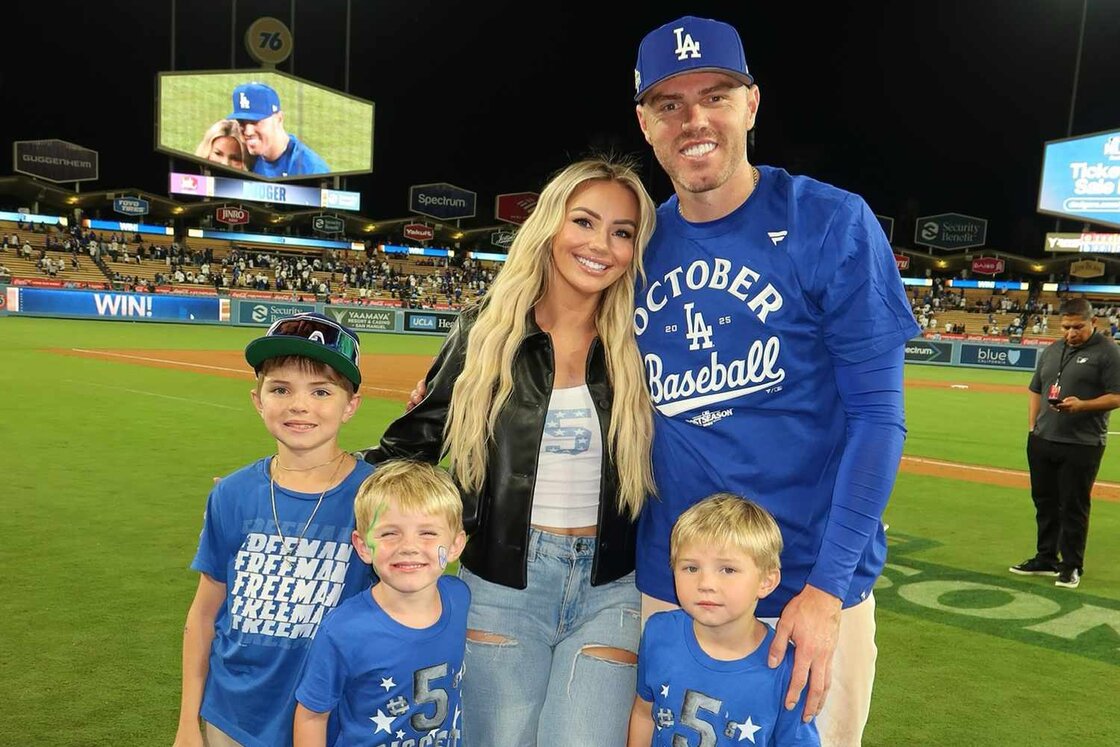
Freddie Freeman — the Los Angeles Dodgers first baseman, 2024 World Series MVP, and one of baseball's most beloved figures — and his wife Chelsea just shared something deeply personal: they welcomed a baby girl via surrogate, completing an emotional family-building journey that Chelsea described as "incredibly difficult but one of the greatest gifts we've ever received."
The couple, who are already parents to three boys, had spoken about their desire to add a daughter to their family. But the path there wasn't straightforward. After health challenges made another pregnancy difficult, the Freemans turned to gestational surrogacy — and last month, a new chapter began.
In This Story
What the Freemans Shared
Chelsea Freeman posted about the arrival on social media, describing the journey with a combination of gratitude and raw honesty that doesn't often make it into celebrity birth announcements. She acknowledged the complexity of watching someone else carry the baby, the emotional rollercoaster of the IVF process, and the awe she felt when they finally held their daughter.
"There are no words for the gratitude we feel toward the woman who carried our daughter. She gave us something we didn't know how to ask for — and she did it with such grace."
— Chelsea Freeman, via social media
Freddie, known for keeping his family life relatively private despite his enormous public profile, echoed the sentiment. The couple didn't detail every step of their journey — and they didn't need to. The headline was enough: surrogacy worked. A healthy baby girl is home. And the family is complete.
For the surrogacy community, that kind of public moment lands differently than another celebrity birth announcement. It's not just a happy story. It's a signal.

Why This Kind of Visibility Matters
Celebrity surrogacy stories have a complicated history in the media. For every thoughtful, surrogate-honoring announcement, there are ten more that treat the gestational carrier as a footnote — or leave her out entirely. The Freemans didn't do that. Chelsea's public acknowledgment of the woman who carried their daughter is exactly the kind of normalization the industry needs.
Here's the data behind why it matters: according to surrogate-reported responses tracked by fertility industry researchers, the #1 reason women say they decided to become a surrogate is because someone they knew or admired had personal experience with surrogacy. Word of mouth and cultural visibility directly drive the pool of potential carriers.
When Selena Gomez spoke about her lupus-related surrogacy plans earlier this year, online searches for "how to become a surrogate" spiked. When Meghan Trainor shared her surrogate story in January, fertility forums lit up with women asking about the process for the first time. Every public figure who talks honestly about their surrogacy journey adds more women to the consideration funnel — and that's a good thing for families who need carriers and for the women who are weighing whether to say yes.
Thinking about becoming a surrogate? See which agencies are right for your state and situation.
Explore agencies →The Surrogate Who Made It Happen
Chelsea Freeman didn't name her gestational carrier — which is almost certainly how the carrier wanted it — but she made something clear: this woman's choice changed their lives. That's the reality of what surrogates do, whether they're helping a Dodger or a schoolteacher in Ohio.
What does the journey actually look like from the carrier's side? It's a 12–18 month commitment that involves extensive medical and psychological screening, legal contracts, IVF protocols (including hormone injections and embryo transfers), ongoing prenatal care, and delivery. It's not casual. It's also, according to the overwhelming majority of surrogates who've done it, deeply meaningful.
A 2026 surrogate-reported survey found that 91% of carriers said they would do it again — a record high. The same data showed that the top motivator wasn't compensation (which typically ranges from $65,000 to $85,000 in total packages), but rather the sense of purpose that comes from giving a family something they couldn't have on their own.
"You carry someone's greatest dream. That's not something you forget."
— Surrogate carrier, Pacific Northwest (via community forum)
The Freemans' story will reach millions of people who may never have thought about surrogacy before. Some of those people are women who'd make extraordinary gestational carriers. Some are couples who've quietly wondered if it could work for them. All of them now know a little more than they did before — and that's exactly how this community grows.
What This Means If You're Considering Surrogacy
Stories like the Freemans' are a useful reminder: the families you help aren't abstractions. They're real people who've been through something hard — fertility challenges, medical setbacks, years of hope and disappointment — and your "yes" changes everything for them. If you've been on the fence, this is worth sitting with. Read through our compensation map and the 2026 surrogate pay breakdown to understand what the financial side actually looks like. Then check agencies in your state to see who handles the kind of matching you'd want.
💛 If You're a Surrogate
- The family you carry for will remember you forever — and likely say so
- Celebrity stories like this one normalize the conversation, making it easier to explain your choice to family and friends
- Demand for qualified surrogates is high in 2026 — qualified carriers have real leverage in matching
- Read our comp breakdown before you sign anything
💙 If You're an Intended Parent
- The Freemans are public proof that surrogacy works — even after difficult journeys
- Agency matching timelines vary widely — compare your options early
- The right agency makes a meaningful difference; read real surrogate reviews before committing
- California remains the gold standard for legal protection; know your state's laws
The Bigger Picture: A Culture Shifting in the Right Direction
The surrogacy landscape in 2026 is moving — and mostly in the right direction. More states have clear, surrogate-protective legal frameworks. More agencies are offering transparent compensation packages. And more public figures are talking about their journeys with the kind of honesty that makes the whole process feel less foreign to people who haven't encountered it yet.
The Freemans joining that conversation — even briefly, even without naming names — matters. It tells the next woman who's been quietly wondering whether to apply that this is something real families do. That it works. That the woman who says yes is not forgotten.
There's a gestational carrier somewhere right now who's scrolling through an announcement like this one and thinking, I could do that. If she applies, gets screened, gets matched, and carries a baby for a family who couldn't get there any other way — that's the story behind the story. That's how this community grows, one public moment at a time.
Ready to explore becoming a surrogate? Find the right agency for your state and situation.
Find my match →